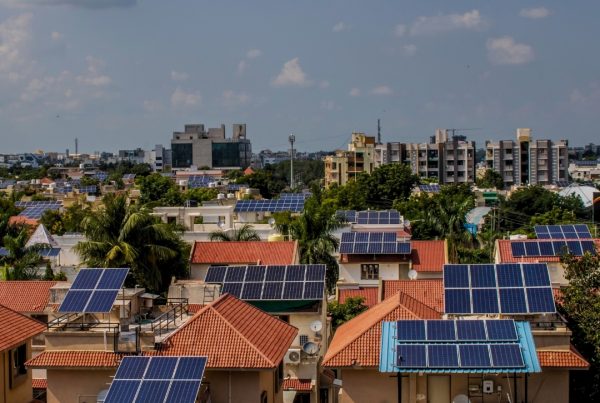
This guide is for homeowners planning a first rooftop system, SMEs evaluating 30–100 kWp, and facilities teams managing multi-site portfolios. We’ll keep things practical: approvals, tariffs, sizing for self-consumption, CAPEX vs OPEX, and what still matters after June 2025.
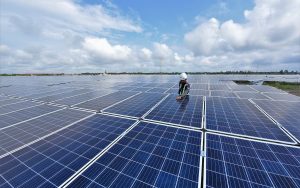 Solar Panel Farm in Malaysia. (Source: TNB)
In 2025, the big change is timing. Malaysia’s NEM 3.0 application window (NEM Rakyat, GoMEn, NOVA) ran until 30 June 2025; projects submitted within the window proceed under existing rules, while new applicants should watch SEDA for any successor/extra quota announcements. SEDA Malaysia
For OPEX/solar leasing, SARE remains available for C&I and Government users with a tripartite structure and single-bill collection via TNBX. TNBX
GTFS 4.0 financing continues until 31 Dec 2025 (or until funds are fully used), offering a 60–80% government guarantee and 1.5% interest/profit rebate to eligible green projects. gtfs.my
For tax, GITA/GITE applications are open 1 Jan 2024–31 Dec 2026 (GITA Asset via MGTC; GITA Project & GITE Solar Leasing via MIDA). MIDA
Solar 101 in Malaysia
Most Malaysian installs are grid-tied: PV feeds your site first and the grid acts as backup. This keeps costs low and ROI high, but it won’t power you during a blackout. Hybrid systems add batteries for backup and limited time-shifting; they cost more and suit sites with outage risks or demand-charge goals. Off-grid systems serve remote locations without TNB supply; they require larger batteries/generators and are usually the most expensive per kWh.
Under Malaysia’s net-metering, self-consumption comes first; any surplus export is credited on your TNB bill. For NEM Rakyat/GoMEn, exported kWh typically offset imported kWh on a 1:1 basis. For NOVA (business users), exports are credited at the Average System Marginal Price (SMP) rather than 1:1, and the offset period under NOVA is 10 years from contract start. Credits show up in the monthly bill; NOVA also supports options like virtual aggregation (Category B) per guidelines. MyTNBSEDA Malaysia
Technical basics you’ll see in proposals: a bi-directional meter for import/export accounting and a PV meter for generation tracking, both required under NEM/NOVA. Your installer handles applications via SEDA/TNB, but it’s good to know what meters and rules apply before you size the system. SEDA Malaysia
Eligibility & Approvals

NEM 3.0 Programme. (Source: SEDA)
NEM categories. Malaysia’s net-metering has three main tracks: NEM Rakyat (households), NEM GoMEn (government premises), and NOVA (business/non-domestic). Pick the track that matches your site type; each has its own rules on credits, metering, and contracts. SEDA Malaysia
Typical approval flow. Get in touch with us, Renosun, we will prepare your design and submit applications. Approvals generally move SEDA (implementing agency) → Distribution Licensee (TNB) → metering/contract → testing & commissioning. For NOVA, systems >72 kW require a Connection Assessment Study (CAS) before approval; after installation, TNB installs a bi-directional meter and the NOVA/NEM contract is executed before commissioning. MyTNBSEDA Malaysia
NOVA capacity limits (business users).
- Category A: up to 1,000 kW; inverter output must be ≤85% of your Maximum Demand (MD). Low-voltage sites are further capped at 60% of fuse/CT rating.
- Category B: up to 5,000 kW and supports virtual aggregation; inverter output must be ≤100% of MD.
These limits are defined in SEDA’s NOVA guideline and ensure the PV size is linked to your billed MD. SEDA Malaysia
Sizing Your System
Matching daytime load & roof potential.
Start with 12 months of bills and isolate weekday daylight kWh. Size the array so most generation is self-consumed (typically the highest ROI). Factor in near-term changes (new HVAC, EV chargers, machinery) and allow headroom if operations will grow. On the roof, check the usable area after setbacks, walkways, skylights, and safety zones. In Malaysia’s near-equatorial sun, south or east–west layouts both work; low tilts on flat roofs are common to reduce wind load and visibility. Do a shading study (parapets, neighbouring trees/structures) and get a structural assessment (wind uplift, corrosion, waterproofing responsibility) before finalising capacity.
Single-phase vs three-phase.
Match the inverter to your supply. Single-phase sites (many homes, some shoplots) often have smaller main fuses and stricter export caps; choose an inverter size that won’t trip the supply or breach limits, and balance large daytime loads on the same phase as PV. Three-phase sites (most commercial/industrial) should use three-phase inverters and distribute strings to follow the load profile—this improves self-consumption and avoids phase imbalance. If you expect heavier equipment later, design the AC side (cabling, breakers, switchboard space) with future capacity in mind.
Export limits, protection, metering (what can add cost/time).
Be aware of possible utility conditions: zero-export controls, inverter export caps, external grid-protection relays, or a connection study—all add equipment, engineering, and lead time. Switchboard upgrades (main incomer, breakers, CT/VTs), surge and lightning protection, earthing improvements, and isolators may be required. Metering typically includes a bi-directional import/export meter and a PV generation meter; meter change appointments and commissioning tests can extend timelines. Build these items—and their contingencies—into your schedule and budget.
Equipment Choices

Solar panel installation by Renosun. (Source: Renosun)
Panels — tier, warranty, degradation
“Tier-1” only indicates bankability (who can get financed), not quality. Prioritise: a product warranty of 15–25 years, a performance warranty to year 25–30 (≥84–88% output remaining), and third-party test marks (PID/LeTID resistance, salt-mist, ammonia). In hot, humid Malaysia, look for a low temperature coefficient (≈ -0.30%/°C or better) and robust backsheet/frame materials. N-type (TOPCon/HJT) typically offers lower first-year loss and ~0.25–0.4%/yr linear degradation vs older PERC. Ask the EPC to show the pan files (flash test), serial tracking, and batch QC.
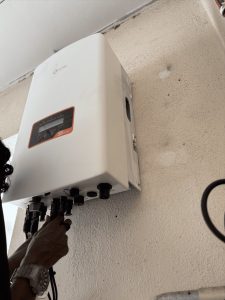
Solar inverter installation by Renosun. (Source: Renosun)
Inverters — string vs micro/optimisers vs central
- String inverters: Best value for most rooftops (homes, SMEs, light industry). Good when strings face similar directions. Easy to keep spares; design with redundancy (e.g., 2–3 units instead of one).
- Microinverters / optimisers (MLPE): Worth it for complex roofs, multiple orientations, or partial shading, and when you want module-level monitoring/shutdown. Expect ~15–20% higher CAPEX.
- Central inverters: Suited to very large, uniform arrays (e.g., ground-mount or >500 kWp rooftops) with clear access rooms. Lower unit cost per kW, but single-point dependency and heavier logistics.
For any topology, check IP rating (outdoor), surge protection, MPP tracker count, and sensible DC/AC ratio (≈1.2–1.5) to reduce clipping without overstressing the grid side.
Balance-of-system — mounting, cabling, monitoring, safety
Choose mounting that matches the roof: ballasted low-tilt on flat roofs (less penetration/wind profile) or penetrative rails on metal decks (with approved waterproofing). Use marine-grade aluminium/stainless fasteners, calculate wind uplift, keep service walkways, and preserve roof warranty. For cabling, specify UV-resistant DC cables, genuine MC4-type connectors, correct string fusing, labelled combiner boxes, and Type II SPD on both DC and AC sides with proper earthing. Metering/monitoring should include an import/export (bi-directional) meter, a PV meter, and a cloud portal; add revenue-grade metering for PPAs. Safety: clear isolators and signage, lock-out/tag-out, arc-fault detection where available, and lightning protection integrated with the site’s earthing system.
Cost & ROI Basics
What drives cost.
Your price per kWp is shaped by system size (larger systems are usually cheaper per kWp), roof type (flat vs metal deck, penetrations, wind loading), and compliance items (export limiting, external protection relays, connection studies). Metering changes (bi-directional and PV meters), switchboard upgrades, surge/lightning protection, and structural works add line items. Logistics—cranage, night works, permits, and site access—can move the needle, as can electronics choices (microinverters/optimisers typically +15–20% vs string).
What drives savings.
Savings come primarily from self-consumption: every kWh you use on-site avoids buying grid energy. Your tariff structure matters (time-of-use rates, ICPT surcharges/credits) and, for C&I, whether solar meaningfully trims demand charges. Exported energy is credited per your scheme (e.g., NOVA vs NEM Rakyat), but business cases are strongest when daytime loads absorb most generation. In short: the closer your PV profile matches your operating hours, the higher the ROI.
Simple payback vs IRR/NPV—why cash-flow modelling matters.
Simple payback ignores time value of money, performance degradation, O&M, inverter replacements, tariff escalation, export credit rules, and financing costs—so it can mislead. IRR/NPV incorporate these realities (and any tax incentives or PPA escalations), giving you a like-for-like view against other investments. Ask for a monthly or annual cash-flow model with scenarios (base/optimistic/conservative) and stress tests on key assumptions (self-consumption %, tariff growth, capex variance). This ensures the decision is based on durable economics, not headline payback alone.
Incentives & Financing (2025)
NEM/NOVA. Malaysia’s NEM 3.0 comprises NEM Rakyat (residential), NEM GoMEn (government), and NOVA (business). The official quota window ran 1 Feb 2021–30 Jun 2025; late-2024 saw extra quota announced for Rakyat and NOVA. If you’re applying now, check SEDA’s site for current status and any successor announcements. SEDA Malaysia
SARE PPAs (utility-bill framework). SARE—administered by TNBX—standardises the tripartite arrangement (Consumer–Investor–TNB) and consolidates solar charges into a single TNB bill, clarifying obligations, metering and collection. Under SARE, TNB applies tiered billing/collection fees (e.g., ~2 sen/kWh <500 kWp down to 0.5 sen/kWh at 2–10 MWp). Always confirm the exact tier in your draft agreement. TNBXShu Pin & Associates
GTFS 4.0. Available until 31 Dec 2025 (or until funds are used), GTFS 4.0 offers a 60–80% government guarantee on the green component and a 1.5% p.a. interest/profit rebate via participating banks. Categories cover Producers, Users, ESCOs and more; applications run via the official GTFS/MyHIJAU channels. gtfs.my
GITA/GITE. The current tax-incentive window is 1 Jan 2024–31 Dec 2026. GITA Asset (own consumption) is administered by MGTC (guideline updated Apr-2024). GITA Project (business purposes) and GITE Solar Leasing applications are submitted to MIDA and have been extended to 31 Dec 2026. Coordinate with your tax advisor to map eligibility and set-off limits. MGTCMIDA
Solar Accelerated Transition Action Programme (Solar ATAP) [coming in December 2025]. Solar ATAP is a new rooftop solar program that replaces the Net Energy Metering (NEM) initiative, which ended on June 30. Like its predecessor, Solar ATAP allows users to sell excess solar energy back to the grid. The energy offset rate will be based on the market electricity price or system marginal price, similar to the NEM NOVA program. This initiative encourages consumers to install solar systems up to 100% of their maximum demand, optimizing solar power consumption and effectively utilizing their rooftop space. The program aims to boost distributed generation in Malaysia’s power supply system and contribute to the country’s goal of achieving 70% renewable energy capacity by 2050, aligning with the Malaysia MADANI principles for sustainable development. Program guidelines and registration will be available from December 1 on the Energy Commission and SEDA Malaysia websites. TheEdgeMalaysia
CAPEX vs OPEX (Which model suits you?)
Buy (CAPEX).
You own the asset, capture all long-term savings, and can claim relevant tax incentives if eligible. Upfront cash is higher, but lifetime cost per kWh is usually lowest. You control equipment choices, O&M standards, and repowering later. Useful when you have strong daytime load and stable site plans.
Loan.
Financing spreads the upfront cost and preserves cash. Model the project so annual savings exceed debt service under conservative assumptions (performance degradation, tariff changes, realistic O&M). You still keep ownership and tax benefits while matching payments to energy savings.
PPA/Leasing (OPEX).
Zero-CAPEX: a solar investor funds, owns, and maintains the system; you buy the solar kWh under a long-term contract. Under SARE (the utility-bill framework), billing and collection are consolidated via TNB/TNBX in a standardised tripartite setup—helpful for governance and payment certainty. MyTNBTNBX By contrast, a private PPA is negotiated directly with the investor (outside SARE) and allows more bespoke terms but places more on contractual due diligence. In either case, scrutinise price-escalation, performance guarantees, early-termination/relocation, and meter/data clauses before signing. splegal.com.my
Batteries (Do you need them?)

Illustration of solar panels and battery storage. (Source: Canva)
Batteries are a smart choice for a few reasons. They provide backup power for critical equipment like POS systems, servers, cold rooms, and process lines. You can also use them to lower your energy bills by reducing demand charges, especially if you have predictable energy peaks. If your site experiences frequent or costly outages, a hybrid solar-and-battery system can isolate certain circuits and prevent downtime. For sites with clear, repeating energy spikes, a battery energy storage system (BESS) can cap those peaks and help stabilize your monthly bill. Finally, where you can’t sell excess power back to the grid, batteries can store midday solar energy for use later in the day.
On pure economics, batteries still add substantial CAPEX and O&M. Savings depend on your tariff (TOU spread), demand charges, the value of avoided outages, and how much export credit you’d otherwise receive under NEM/NOVA. Arbitrage gains are modest if daytime tariffs already align with PV output, so the business case improves mainly with peak-shaving and resilience. Model real-world performance (round-trip efficiency, degradation, warranty cycles, inverter replacements) and include conservative assumptions.
Start with load analysis before sizing any battery. Pull 12 months of interval data (15/30-min), identify critical loads to back up, locate the top 10–20 peak intervals, and estimate the cost of downtime. Then run scenarios: (1) backup-only, (2) peak-shaving, (3) both. Right-size to the job—often a smaller, targeted BESS on a dedicated backup board outperforms an oversized, whole-site system. Confirm safety, space, thermal needs, and compliance (anti-islanding, metering, protection) early to avoid redesign later.
Common Pitfalls to Avoid
Under- or over-sizing (poor self-consumption).
Size to your daytime load, not just roof area. Use 12 months of bills (ideally 15/30-min interval data) to match PV output to operating hours. For homes and SMEs, aim for a high self-consumption ratio (e.g., 70–90%) to maximise avoided grid purchases. Oversized systems push more energy to export credits (less valuable for businesses under NOVA) and extend payback; undersized systems leave easy savings on the table. If future loads will grow (HVAC upgrades, EV chargers), consider staged capacity or inverter/AC provisions to add later.
Ignoring approval conditions (export limit, protection).
Utility approvals often include export caps (zero-export or kW limits) and grid-protection requirements (external relays, anti-islanding, connection studies). These add hardware, engineering, metering changes, and lead time. If they’re not priced in, your budget and ROI will shift after the fact. Always obtain the formal approval letter and ensure your quote explicitly covers all conditions, including meter upgrades, switchboard works, tests, and commissioning appointments.
Over-optimistic tariff/escalation assumptions in models.
Cash-flow models can look great if assumptions are aggressive. Stress-test the numbers: tariff growth, ICPT adjustments, Average SMP (for NOVA exports), panel degradation, O&M, and inverter replacements. For PPAs, check the price escalator and termination clauses; for loans, include interest and fees. Ask for base/optimistic/conservative cases and confirm IRR/NPV remain attractive when self-consumption drops a few points or capex rises. Solid decisions come from conservative inputs, not headline payback.
FAQs
How long is payback for homes vs SMEs?
Homes typically see ~5–7 years depending on usage, roof, and equipment costs. SMEs with strong daytime loads often achieve ~4–6 years, because most PV energy is self-consumed at business hours. Actual results depend on capex, tariff/ICPT, and how closely generation matches your load.
What happens to credits if I move?
NEM/NOVA arrangements and any accumulated credits are generally tied to the TNB account and premise, not the person. If you close the account or move, credits typically don’t follow you; unused balances may lapse. If a sale/transfer is planned, discuss account options with your installer and TNB/MyTNB before you proceed.
Can solar reduce demand charges?
Sometimes. Demand charges reflect your highest kW peak in a billing period. If that peak occurs while the sun is producing, PV can shave it. If your peaks happen at night or during cloudy, late-day windows, PV alone won’t help—load management or batteries are needed to consistently cut demand.
Roof warranty and waterproofing?
Use mounting systems and penetrations approved for your roof type, with documented waterproofing details and a clear responsibility matrix (roofer vs EPC). Keep service walkways, respect wind-uplift requirements, and use corrosion-resistant hardware. Get written confirmation that roof warranties remain valid after installation.
What maintenance is needed?
Plan for periodic cleaning (dust, bird droppings), annual electrical and safety checks, and remote monitoring to catch faults early. Inverters may need component replacement within the project life; budget for this and keep spares where practical. Trim nearby vegetation, clear gutters, and log all service actions for warranty support.
Ready to check feasibility and ROI for your site?
Book a consultation with Renosun for a free onsite assessment. We’ll review your bills, roof, and load profile, then share a clear CAPEX vs OPEX comparison with next steps.