This guide is for Malaysian businesses with meaningful daytime operations—SMEs, factories, warehouses, offices, retail outlets, and hospitality sites. If your site runs during sunlight hours and pays regular TNB bills, you’re a strong candidate for rooftop solar.
We focus on what decision-makers need: how commercial solar works, expected ROI and payback, CAPEX vs OPEX (PPA/Leasing) options, incentives and approvals, sizing, equipment choices, and basic O&M—so you can compare scenarios with confidence.
Lower OPEX, hedge tariff volatility, and meet ESG targets with measurable carbon reduction.

Renosun provides solar panel solutions for commercial and industrial use.
How Commercial Solar Works (Quick 101)

Grid-tied basics (self-consumption first, export credits).
Solar panels generate DC power when the sun shines. An inverter converts this to AC and feeds your building loads first—this is self-consumption, the main source of savings. If generation is higher than your real-time usage, the surplus is exported to the grid and shown as credits on your TNB bill (under NEM/NOVA rules for eligible sites). A standard grid-tied system does not run during a blackout unless you add batteries and backup circuits (hybrid setup). Best ROI happens when your daytime load closely matches solar output.
Typical components (panels, inverters, monitoring).
A commercial system includes: PV modules on engineered mounting (metal deck or flat-roof low-tilt), DC cabling with isolators/combiner boxes, and an inverter (usually string inverters; micros/optimisers of multiple roof faces or shading). On the AC side, you may need switchboard provisions, protection, and a bi-directional import/export meter (plus a PV generation meter where required). A cloud monitoring portal tracks energy, alarms, and uptime for O&M. Optional items—zero-export controller, surge/lightning protection, and structured walkways—help meet utility conditions and reduce operational risk.
ROI & Payback: What Drives the Numbers
Cost drivers (CAPEX).
Your installed price per kWp is shaped by system size (bigger systems usually cheaper per kWp), roof type (metal deck vs flat roof and penetrations), and compliance items—export limiting, external grid-protection relays, connection studies, and meter changes. Structural works, switchboard upgrades, surge/lightning protection, crane access, night work, and site logistics also move the number. Electronics choices matter too: micros/optimisers typically add ~15–20% vs string inverters.
Savings drivers (OPEX reduction).
Savings come mainly from self-consumption—every kWh you use directly avoids buying from TNB. The higher your daytime load matches, the faster the payback. Tariff structure (TOU rates, ICPT adjustments) and whether PV coincides with your demand peaks determine additional gains; steady daytime operations (warehouses, cold rooms, light manufacturing) typically see stronger returns than sites with evening-heavy loads.
Simple payback vs Net Present Value (NPV) and Internal Rate of Return (IRR).
Simple payback is quick to read but ignores time value, degradation, O&M, inverter replacements, tariff escalation, export-credit rules, and financing costs—so it can mislead. Use IRR/NPV with conservative inputs and scenarios (base/optimistic/conservative) to compare CAPEX, loan, and PPA paths on equal footing. Ask for a cash-flow model that stress-tests self-consumption %, capex variance, and tariff changes; choose the option with resilient IRR, not just the shortest headline payback.
CAPEX (buy/own): highest lifetime savings, tax allowances
Buying the system gives you full ownership, control over equipment, and the lowest levelised cost per kWh over the life of the asset. You can usually claim tax allowances (subject to eligibility) and depreciate the asset, which shortens payback. The trade-offs: higher upfront cash, on-balance-sheet treatment, and you’re responsible for O&M (cleaning, inspections, inverter replacements). CAPEX suits sites with stable operations, strong daytime load, and long-term occupancy.
Loan: match savings to instalments
A loan keeps ownership with you while spreading CAPEX over time. Structure the tenor so projected annual savings ≥ annual debt service under conservative assumptions (degradation, O&M, tariff scenarios). You still access applicable tax incentives and retain control of assets/specs. Check all-in cost of funds (rate, fees), prepayment terms, covenants, and whether green-financing lines are available from your bank.
OPEX (PPA/Leasing/SARE): zero upfront, check escalation & terms
With a PPA/leasing model, an investor funds, owns, and maintains the system; you pay per kWh under a long-term contract, often zero upfront. Under utility-bill frameworks (e.g., SARE), solar charges appear on your TNB bill; private PPAs bill you directly. Focus due diligence on: price vs current tariff, escalation formula, performance guarantees, metering/verification, early termination/relocation, and end-of-term options (buyout/renewal/removal). OPEX is best when you want savings without tying up capital—and you’re comfortable trading some lifetime upside for simplicity and risk transfer.
Incentives & Programmes (At a Glance)
Net metering for businesses (NOVA).
Under NOVA, solar generation serves your site first (self-consumption). Any surplus goes to the grid and is credited on your bill at a market-linked rate (commonly tied to system marginal price). System sizing and interconnection are subject to utility rules and maximum-demand links, so expect technical conditions (e.g., export caps, protection). Always check your latest quota status and the exact crediting method in your NOVA agreement before finalising ROI.
Utility-bill PPA framework (SARE).
SARE standardises a tripartite setup between you (consumer), the solar investor, and the utility. Solar charges and normal electricity charges appear on a single utility bill, simplifying payment and reducing counterparty risk. Fees and metering requirements are specified in the SARE documents; review escalation, performance guarantees, and end-of-term options (renew, remove, or buyout) before signing.
Financing/tax levers (green financing, investment allowances).
Banks in Malaysia offer green-financing lines that can lower the cost of funds for CAPEX projects; PPAs shift spend to OPEX with no upfront cash. On tax, investment allowances for eligible self-use or leasing structures can materially improve cash flow, but eligibility, caps, and claim mechanics vary—coordinate early with your tax adviser and confirm the current windows with the relevant agencies.
Sizing Your System
Match daytime load profile; aim for high self-consumption.
Start with 12 months of bills (ideally 15/30-min interval data) to see when you use power. Size the PV so most generation is consumed on-site during operating hours—this is what drives ROI. Prioritise the base load that runs every sunny hour (HVAC, chillers, IT, lighting); avoid oversizing into regular mid-day export unless credits are attractive. If your load will grow (new machinery, EV chargers), plan staged capacity or leave AC space to add later. Use conservative assumptions for performance, degradation, and downtime.
Roof assessment: area, orientation, shading, structure.
Map usable roof area after setbacks, walkways, skylights, vents and safety zones. In Malaysia, both south and east-west layouts work well; low tilts on flat roofs reduce wind load and visual profile. Run a shading study for parapets, equipment and nearby buildings/trees. Confirm structural capacity (dead load + wind uplift), corrosion environment, penetrations/waterproofing responsibilities, and lightning/earthing integration. Ask for a detailed layout (row spacing, access aisles) before you lock in capacity.
Single-phase vs three-phase considerations.
Match inverter topology to your supply. Single-phase sites usually face tighter export caps and main-fuse limits—choose inverter sizes that won’t trip protection and keep large daytime loads on the PV phase. Three-phase sites should use three-phase inverters and balance strings across phases to follow the load profile and avoid imbalance. Check the main switchboard’s spare capacity, protection settings, and CT/VT ratings; some approvals add export limits or external protection relays that influence final sizing and cost.
Equipment Choices
Panels: tier, warranty, degradation
“Tier-1” means the brand is bankable, not automatically “best.” Prioritise a 12–15 year product warranty and a 25–30 year performance warranty with ≥84–88% power remaining at end of life. In Malaysia’s heat, look for a low temperature coefficient (~-0.30%/°C or better) and proven resistance to PID/LeTID. Newer n-type (TOPCon/HJT) modules usually have lower first-year loss and slower annual degradation (~0.25–0.4%/yr). Ask for serial tracking and batch test data in your handover pack.
Inverters: string vs micro/optimisers vs central (when to use which)
- String inverters: Best value for most rooftops (offices,residential, warehouses). Use when roof faces are similar and shading is minimal. Design with multiple smaller units for redundancy.
- Microinverters/optimisers (MLPE): Choose for complex roofs, mixed orientations, or partial shading, and when module-level monitoring/shutdown is desired. Expect ~15–20% higher CAPEX.
- Central inverters: Fit for very large, uniform arrays (e.g., ground-mount or >500 kWp rooftops) with dedicated electrical rooms. Lower cost per kW, but more single-point dependency.
For any option, check outdoor rating (IP), surge protection, MPP tracker count, and a sensible DC/AC ratio (≈1.2–1.5) to reduce clipping without stressing the grid side.
BOS: mounting, cabling, monitoring, safety & lightning
Match mounting to the roof: low-tilt ballasted for flat roofs (fewer penetrations) or rail/standing-seam clamps for metal decks with approved waterproofing. Use marine-grade aluminium/stainless steel, plan walkways and keep skylights/vents accessible. Specify UV-rated DC cables, genuine MC4-type connectors, correct string fusing, labelled combiner boxes, and neat cable management. Monitoring should include a cloud portal plus an import/export bi-directional meter and a PV generation meter where required (essential for PPAs). For safety, include Type II SPDs on DC/AC, proper earthing, visible isolators, lock-out/tag-out points, and integrate with the site’s lightning protection.
Approvals & Compliance
Installation flow.
Renosun starts with an on-site assessment and bill analysis to size the system for self-consumption. We design the layout, single-line diagram, and protection scheme, then submit the application through a Registered PV Service Provider to SEDA and the utility. After approvals and meter arrangements are confirmed, we proceed with procurement, installation, testing, and commissioning. Handover includes warranties, O&M plan, and access to the monitoring portal.
Common conditions.
Approvals may include export limits (zero-export or a kW cap), requirements for external grid-protection relays (anti-islanding, voltage/frequency protection), and sometimes a connection or impact study—especially for larger systems or sensitive feeders. These conditions can add hardware, engineering, and time. They must be priced into the proposal and reflected in the ROI model.
Timeline and documents to prepare.
Timelines depend on scope and utility scheduling, but expect distinct stages: design, submission, approval/metering, installation, and commissioning. To keep things moving, prepare 12 months of TNB bills (with demand/TOU data if applicable), company details (SSM profile and authorised signatory letter), the TNB account information, roof drawings or as-built plans, photos of switchboards/roofs, a load list, and any existing structural reports. Clear documents and quick site access help approvals and meter appointments happen faster.
Deployment Options
 Rooftop (metal deck, flat roof low-tilt).
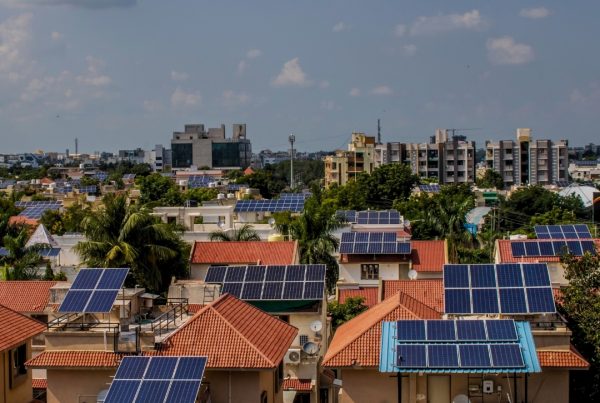
Most commercial sites use rooftops because they’re close to the load and don’t require extra land. On metal decks, rail or standing-seam clamps minimise penetrations; ensure approved waterproofing details and keep service walkways for O&M. On flat roofs, low-tilt ballasted systems reduce wind profile and visual impact but add weight—confirm structural capacity (dead load + uplift) and drainage paths. Plan array blocks around skylights, vents and access hatches, and integrate lightning/earthing and fall-protection from the start.
 Carport / canopy.
Carports convert parking areas into generation assets while providing shade and weather protection for vehicles. They add steelwork and foundations, so CAPEX per kWp is usually higher than rooftop, but they deliver visibility, staff comfort and potential EV-charging readiness. Pay attention to bay geometry, clear heights for vans/lorries, column spacing, stormwater flow, and night-time lighting. Pre-fabricated canopies can speed installation; coordinate with site traffic to minimise disruption during works.
Ground-mount (when roof is unsuitable).
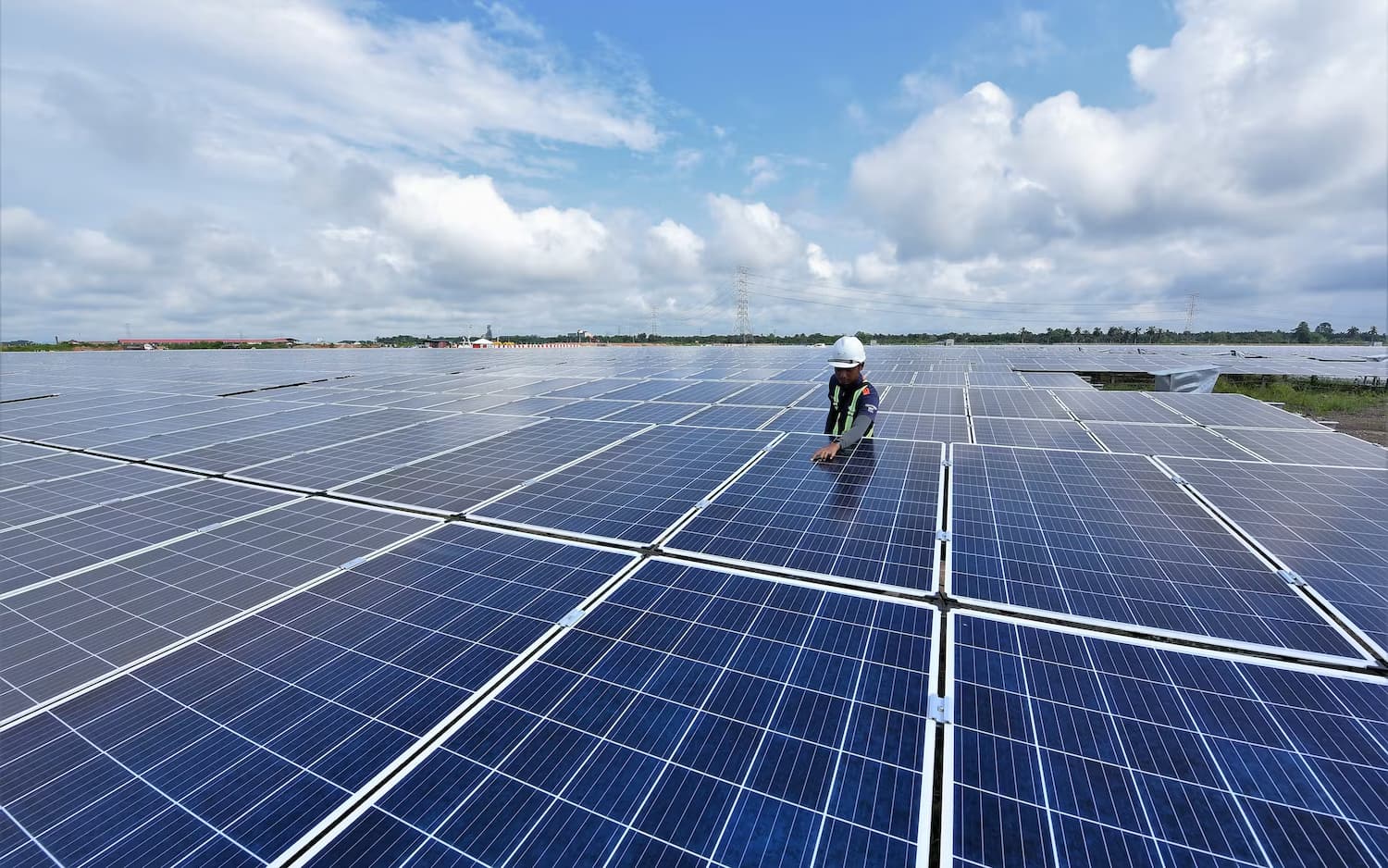
Ground-mount is ideal when the roof lacks space or structure, or when you need large capacities with standardised row spacing for easier maintenance. Expect civil works (levelling, fencing, drainage), geotechnical checks for piling/screw anchors, and more detailed environmental and permitting steps. Choose fixed-tilt for simplicity and reliability; tracking is possible but adds moving parts and maintenance. Lay out arrays to avoid shading between rows, preserve access roads for cleaning and inverter swaps, and plan security (CCTV, perimeter) for unmanned areas.
O&M & Performance
Cleaning schedule, annual electrical checks.
Plan routine cleaning to keep output stable—typically every 3–6 months in Malaysia, and sooner after haze, construction dust, or nesting birds. Use soft brushes, de-ionised water if available, and avoid detergents that leave residue. Do an annual electrical inspection: torque checks on terminals, insulation/earth tests, SPD and fuse checks, visual scan for hot spots or cracked glass, and verify string currents against design. Keep gutters clear, walkways unobstructed, and record all actions for warranty support.
Remote monitoring & fault response.
Enable the inverter/cloud portal and set alerts for inverter trips, low string current, and abnormal PR/specific yield. Review dashboards weekly to spot underperforming strings or shading changes; compare current output to historical baselines and weather. Define a simple SLA: who receives alerts, response time for remote resets, and site call-out thresholds. Keep a small spare kit (fuses, MC4 connectors, labels) so minor faults don’t extend downtime.
Inverter replacement planning and warranties.
Budget for at least one inverter replacement over a 20–25-year project life; many units last 8–12 years depending on environment and ventilation. Standard inverter warranties are 5–10 years with extensions available—register them and note claim procedures. Panel product warranties are typically 12–15 years with 25–30-year performance terms; keep serial maps and commissioning photos to simplify RMA. Track degradation and O&M costs in a simple ledger so your lifetime LCOE and ROI stay on plan.
Sector Snapshots (What to Expect)
Warehouse & logistics (daytime base load).
Warehouses typically run steady daylight loads—lighting, ventilation, conveyors, office IT—so self-consumption is high. Large, simple roofs make installation efficient; east–west layouts broaden the production curve to match working hours. Weekends or night shifts may be lighter, so avoid oversizing into frequent exports. Demand charges are usually moderate; batteries are optional unless you need resilience for scanners, servers, or dock equipment.
Cold storage & F&B (demand peaks).
Chillers and compressors create sharp peaks and 24/7 consumption. PV offsets a meaningful daytime slice, but night peaks won’t be covered without load control or batteries. Coordinate defrost cycles and charging routines to align with solar hours, and consider VFDs or soft starters to tame spikes. Expect strong ROI from kWh savings; add peak-shaving storage only if demand charges are consistently high and predictable.
Office/retail (weekday vs weekend patterns).
Offices and malls concentrate usage on weekdays and daytime—an excellent PV match. Self-consumption dips on weekends/holidays, so right-size to weekday baseloads and consider carports if roof area is limited. Check tenancy/sub-metering rules early (owner vs tenant billing) and confirm chiller plant schedules; PV is most valuable when AHUs, lifts, and common-area loads run during solar hours.
Light manufacturing (shift hours).
Production lines, compressors, and process heaters drive sizable daytime loads; PV performs well on single-shift or day-dominant sites. For two-shift operations, solar still trims the first shift while leaving night usage to the grid. Map start-up surges and install VFDs where feasible to reduce peaks. Size inverters for three-phase balance, plan electrical clearances at the main board, and keep room to expand if throughput is set to grow.
Risks & Common Pitfalls
Under/over-sizing (poor self-consumption).
Size to your daytime load, not just roof area. Use 12 months of bills (ideally 15/30-min data) to match PV output to operating hours. Oversizing pushes surplus to exports (typically lower value for businesses), stretching payback; undersizing leaves easy savings unused. If loads will grow, plan staged capacity or reserve electrical/roof allowance for later.
Ignoring approval conditions (cost/time impacts).
Utility approvals may impose export limits, external grid-protection relays, metering changes, or a connection study. These add hardware, engineering, and lead time. Ensure your proposal prices these in, obtain the formal approval letter, and confirm switchboard works, meter appointments, and commissioning tests are included—otherwise ROI and schedule will slip.
Over-optimistic tariff or escalation assumptions.
Cash-flow models can look great with aggressive inputs. Stress-test tariff/ICPT changes, demand-charge effects, Average SMP (for exports), PV degradation, O&M, and inverter replacement. For PPAs, scrutinise price escalators, performance guarantees, and termination/relocation terms; for loans, include interest, fees, and covenants. Choose options that still meet targets under conservative scenarios.
FAQs
Typical payback range for SMEs
Most SMEs with steady daytime loads see simple payback in ~3–5 years. Results depend on system size, installed cost, self-consumption %, tariff/ToU, and any export limits or protection requirements. A proper cash-flow model (with IRR/NPV) gives a truer picture than headline payback.
Can solar reduce demand charges?
Yes—only if your site’s peak kW occurs while the sun is producing. PV can shave those peaks, lowering billed demand. If peaks happen at night or during cloudy late afternoons, pair PV with load management (staggered starts/VFDs) or battery peak-shaving for consistent reductions.
Roof warranty/waterproofing
Use mounting systems approved for your roof type and document every penetration (method, sealant, warranty owner). Keep service walkways, respect wind-uplift requirements, and use corrosion-resistant hardware. Get written confirmation that the roof warranty remains valid post-installation and record photos before/after work.
What maintenance is needed?
Plan cleaning every 3–6 months (more often after haze or nearby construction), plus annual electrical checks (torque, insulation, SPD/fuse, string health). Enable remote monitoring with alerts for underperformance. Budget for at least one inverter replacement over 20–25 years, and keep a simple O&M log to protect warranties and track yield.
Ready to check feasibility and ROI for your site?
Book a consultation with Renosun for a free onsite assessment. We’ll review your bills, roof, and load profile, then share a clear CAPEX vs OPEX comparison with next steps.